
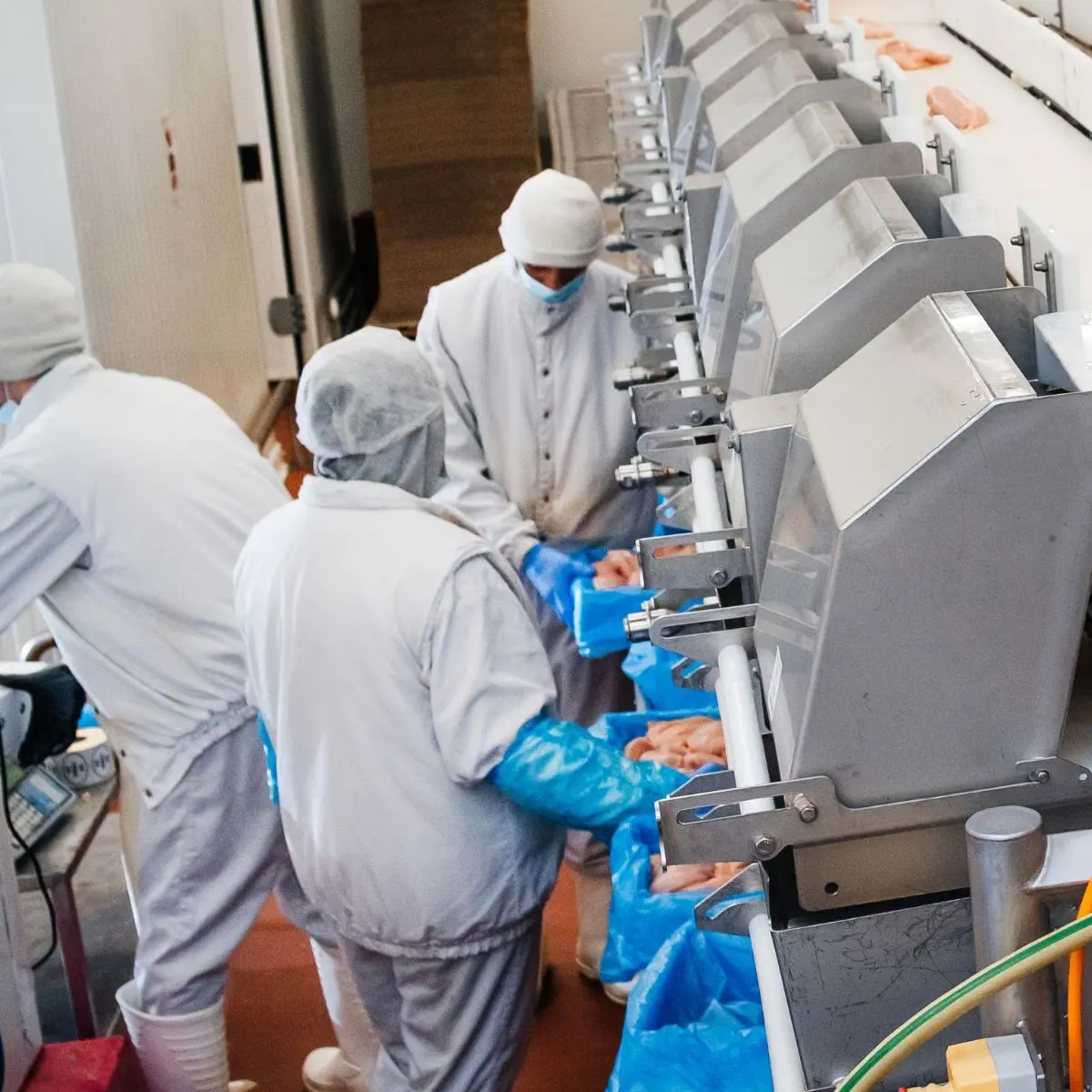
At a regional meat processing facility, what began as a routine meeting with HS Ultra quickly became a pivotal conversation about the future of food safety. A recent quality flag—though minor and swiftly contained—sparked a deeper question from facility leadership:
“How can we do better, even if nothing is technically broken?”
That question marked a turning point. Rather than simply reacting to potential risk, the facility’s team chose to rethink their approach from the ground up—exploring how new disinfection technologies could make operations safer, more efficient, and more compliant with tightening USDA standards.
HS Ultra entered the conversation not as a vendor selling a product, but as a strategic partner in helping the facility evolve from risk management to resilience.
The Problem: A Wake-Up Call Without a Crisis
The facility’s processes weren’t failing—but they were showing signs of strain. Manual acetic acid rinses, while compliant, were proving to be:
- Labor-intensive and inconsistent.
- Limited in coverage and repeatability.
- Harsh for workers handling chemicals daily.
Even though their system met USDA expectations, leaders realized it wasn’t sustainable for future growth—especially with plans to expand into USDA-inspected operations that demand higher levels of documentation, verification, and traceability.
The facility’s goal was clear: reduce chemical dependency, enhance worker safety, and align with modern food safety standards.
That’s when HS Ultra’s experts introduced a new approach—aqueous ozone (AO)—a powerful, chemical-free disinfection method proven across multiple sectors in food processing.
HS Ultra’s Strategic Approach: Aqueous Ozone
Aqueous ozone (AO) is an advanced, on-demand disinfection solution that integrates directly into existing workflows. It harnesses the oxidizing power of ozone gas infused in water, creating a potent sanitizer that breaks down naturally into oxygen and water after use.
HS Ultra’s AO technology was proposed as a plug-and-play replacement for traditional acetic acid rinses. The advantages were immediate and measurable:
Key Benefits of Aqueous Ozone in Meat Processing:
- Seamless Integration: Works with existing spray, rinse, and sanitation systems.
- Worker Safety: Minimal off-gassing, no harmful residues, and safe for use in enclosed environments.
- Chemical Reduction: Reduces or eliminates the need for acetic acid, peracetic acid, and chlorine-based chemistries.
- Eco-Efficiency: No waste stream contaminants or chemical handling requirements.
- Operational Simplicity: Consistent, automated dosing and continuous on-site generation.
By integrating AO into multiple touchpoints of the production process—from carcass rinses to equipment sanitation—HS Ultra helped the facility envision a cleaner, safer, and more scalable path forward.
ROI Beyond Equipment: Building Resilient Food Safety Protocols
HS Ultra’s focus extends far beyond simply installing new hardware. Their mission is to redefine disinfection as a system, not a step.
For this facility, that meant taking a holistic view of the entire operation—from raw intake to ready-to-eat product—and assessing every stage for potential microbial risk, chemical exposure, and inefficiency.
Instead of just asking, “What equipment should we buy?”, HS Ultra encouraged a more strategic question:
“How can we strengthen our entire food safety ecosystem?”
That shift in mindset allowed the team to look at every process—rinsing, handling, storage, and transport—as an opportunity to improve traceability and reduce risk.
As one facility leader summarized:
“We’re bumping up against the ceiling of our current system. We’re not broken, but we’re not future-proofed either.”
By embracing HS Ultra’s ozone-based solutions, the plant positioned itself for long-term resilience, not just short-term compliance.
Preparing for USDA Inspection and High-Stakes Customers
Transitioning into USDA-inspected status represents a major milestone—and challenge—for any processing plant. It demands not only impeccable hygiene and process control, but also documented verification that interventions are measurable, repeatable, and validated.
HS Ultra’s aqueous ozone systems support these goals by delivering:
- Consistent Intervention Performance: Automated ozone dosing ensures uniform microbial reduction without manual mixing.
- Data and Traceability: Each system can integrate with existing monitoring tools for logging and verification.
- COA Compatibility: Aqueous ozone interventions are fully compatible with Certificate of Analysis (COA) testing protocols.
- Customer Differentiation: Demonstrating a move toward chemical-free, high-integrity processing sets facilities apart in a competitive marketplace.
For processors supplying premium or export markets, these differentiators are not just regulatory—they’re strategic advantages.
What Comes Next: Site Visit and Food Safety Review
HS Ultra’s collaboration doesn’t stop with equipment recommendations. To ensure that every implementation aligns with real-world workflows, their team conducts on-site evaluations to:
- Map existing process lines and rinse zones.
- Identify integration points for aqueous ozone systems.
- Quantify microbial risk across key surfaces and stages.
- Design an economically viable retrofit proposal tailored to the plant’s infrastructure.
Following the visit, HS Ultra also assists with third-party food safety reviews to identify gaps in HACCP documentation, sanitation verification, and process control.
This comprehensive approach ensures facilities not only adopt new disinfection technology—but also have the confidence to demonstrate compliance during USDA audits and customer inspections.
A Comprehensive, Multi-Layered Solution
HS Ultra’s approach extends beyond aqueous ozone. In many facilities, AO interventions are paired with other advanced disinfection technologies—such as UV-enhanced air systems or plug-in ozone sprayers for hard-to-reach areas.
Each component serves a unified goal: creating a closed-loop disinfection ecosystem where every touchpoint—from equipment surfaces to ambient air—is addressed.
This not only enhances overall pathogen control but also supports worker health, reduces odor, and improves environmental sustainability.
The Broader Impact: From Compliance to Culture
Perhaps the most powerful outcome of HS Ultra’s partnership with this meat processing facility wasn’t the installation itself—it was the cultural shift that followed.
By challenging the assumption that “compliant equals optimal,” leadership began to foster a proactive culture of food safety. Teams started asking smarter questions, looking for efficiencies, and identifying areas for continuous improvement.
That mindset—supported by data-driven disinfection technology—has become a defining feature of the facility’s identity.
In an industry where recalls, rework, and microbial incidents can devastate reputations, HS Ultra helps clients build trust through transparency and innovation.
Why Aqueous Ozone Represents the Future of Meat Processing
The meat industry is evolving rapidly. As consumer expectations for chemical-free, responsibly produced products grow, and as USDA scrutiny increases, traditional sanitizers are reaching their limits.
Aqueous ozone offers a way forward—a science-backed, worker-safe, and sustainable disinfection method that fits seamlessly into existing systems.
HS Ultra’s expertise ensures facilities don’t just install ozone—they succeed with it. From correct system sizing and placement to data validation and HACCP alignment, their approach delivers lasting value.
It’s not just about compliance—it’s about resilience.
Final Thoughts: A Better Normal for Meat Processing
What began as a flagged test result has become a blueprint for progress. Through collaboration, innovation, and strategic foresight, HS Ultra helped transform a moment of concern into an opportunity for leadership.
With aqueous ozone technology, meat processors can:
- Reduce dependency on acetic acid and other harsh chemicals.
- Protect workers from chemical exposure.
- Meet and exceed USDA and customer standards.
- Strengthen food safety from raw to ready-to-eat.
- Build a future-ready foundation for growth and compliance.
HS Ultra isn’t just changing how facilities sanitize—they’re changing how they think about safety itself.
In this new era of food production, clean doesn’t have to mean chemical, and innovation goes hand in hand with compliance.
Ready to Strengthen Your Food Safety Program?
Whether you’re preparing for USDA inspection, pursuing HACCP optimization, or exploring ways to reduce chemical usage, HS Ultra can help design a tailored aqueous ozone solution for your facility.


