Food safety isn’t just about compliance—it’s about transformation. Ozone vs chlorine dioxide is becoming a defining question in this discussion. That was the takeaway from a recent design confirmation meeting between HS Ultra and a Midwest vegetable processor evaluating the switch from chlorine dioxide to aqueous ozone (AO) for their chilled water bath systems. The conversation, led by HS Ultra President Alex Haag and key plant engineers, revealed valuable insights on ozone performance, system controllability, and the path to more sustainable disinfection.
This blog recaps the technical findings and decisions made, while answering two of the most common commercial buyer questions:
- Can two disinfection systems be controlled independently if they’re tied to the same generator?
- What’s the maximum parts per million (PPM) of ozone allowed—and what’s ideal for food contact?
Understanding the Food Plant Setup
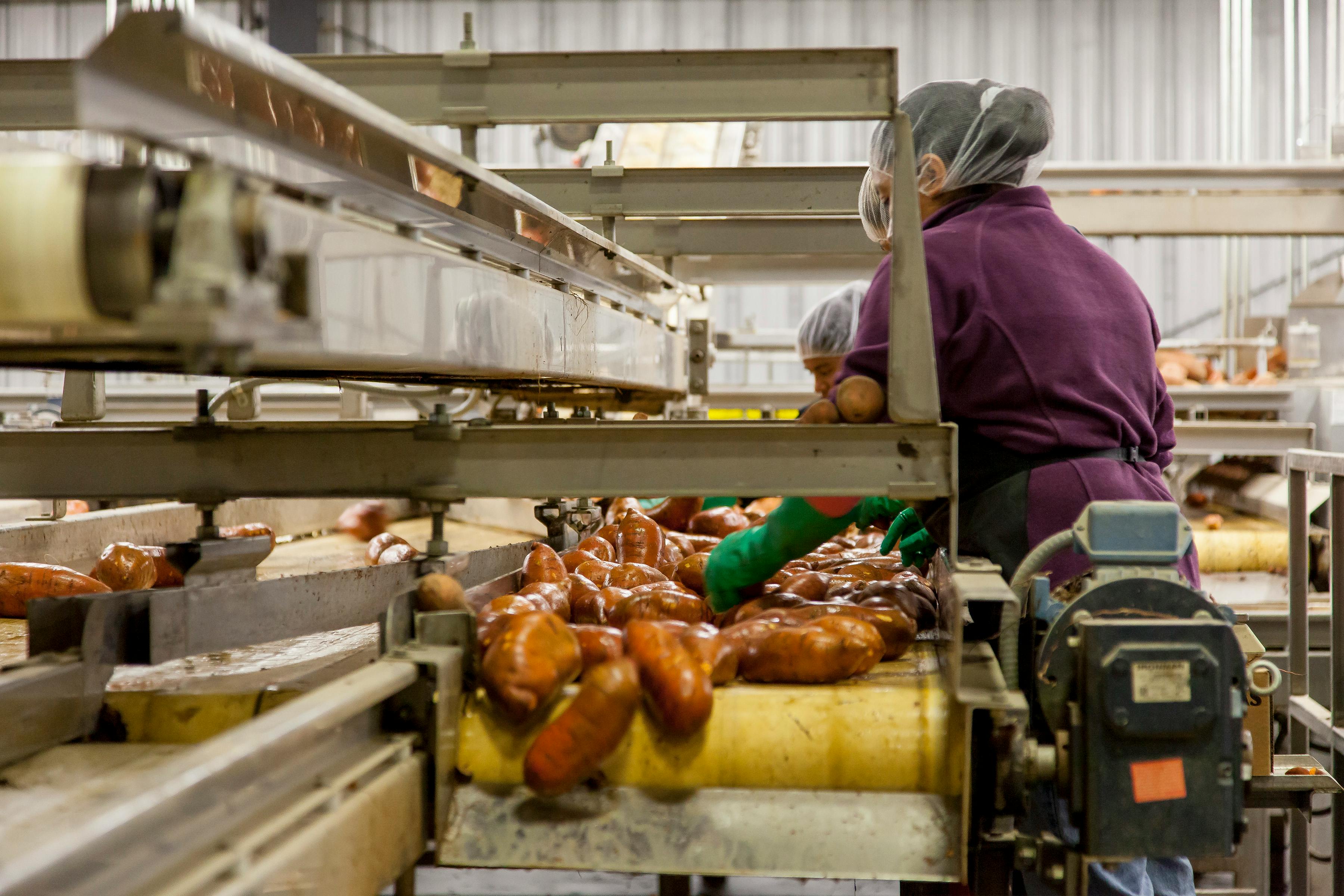
The plant’s water treatment system involves two separate processing loops: a multi-stage cooling tunnel and a pump-fed flume system, both responsible for washing, chilling, and conveying large volumes of green beans. Each loop introduces 15 gallons per minute (GPM) of fresh water, with system flow rates nearing 30 GPM and a total turnover rate of every 30 minutes.
Historically, the plant has relied on chlorine dioxide (ClO₂), introduced at specific feed points. However, this method leaves behind chemical residues and introduces safety concerns. As food safety standards evolve, so too must the methods.
What is Chlorine Dioxide?
Chlorine Dioxide (ClO₂) is a strong oxidizing agent made up of one chlorine atom and two oxygen atoms. It dissolves easily in water and is commonly used for water treatment to control bacteria, viruses, and biofilm.
In water, ClO₂ forms chlorite ions that disinfect by disrupting microbial cells. While effective, it requires precise dosing and monitoring, as it can form regulated byproducts and is less stable than some advanced oxidation methods.
What is Ozone?
Ozone (O₃) is a naturally occurring form of oxygen composed of three oxygen atoms. Because it is a strong oxidizing agent, it can inactivate bacteria, viruses, mold, and fungi by damaging their cell walls and genetic material. It leaves no harmful chemical residues, as ozone naturally reverts back to oxygen after use.
How does ozone compare to chlorine dioxide in water purification? Comparing AO to Chlorine Dioxide
HS Ultra’s aqueous ozone solution offers a compelling alternative to ClO₂ injection:
| Feature | Aqueous Ozone (AO) | Chlorine Dioxide (ClO₂) |
| Oxidation Power | 2.5x stronger than ClO₂ | Effective but slower acting |
| Residue | Breaks down into oxygen and water | Leaves chlorinated byproducts |
| Biofilm Removal | Actively destroys and prevents biofilm | Limited impact on biofilms |
| Environmental Safety | GRAS-rated, no chemical runoff | Requires mitigation for byproducts |
| System Compatibility | Non-corrosive at effective doses | Potential for equipment wear |
A high-concentration ozone treatment (around 5 ppm) can often replace the entire multi-step sanitation cycle used with chlorine and peracetic acid, dramatically simplifying operations and cutting costs.
Can Two Water Loops Be Controlled Separately?
The short answer: not directly if they’re fed by a single ozone generation system.
If both loops draw from one AO unit, the PPM of ozone delivered will be the same across both systems. The lowest residual reading (e.g., from the flume or chiller) will drive adjustments to the whole system. That means if one loop needs more ozone to maintain effectiveness, the other loop gets more than it needs—but there’s no harm or cost penalty. Ozone gas is non-toxic in these concentrations and doesn’t accumulate like chemicals.
“You might see whichever system is the lowest hit your target residual, and the other just gets a little more disinfection as a bonus,” Haag explained.
For true individual control, HS Ultra can provide two smaller AO units (ozone generators), allowing independent PPM control per loop. While this introduces redundancy and reliability benefits, it increases cost slightly and is generally only necessary in highly complex or highly regulated environments.
What Is the Maximum Allowable Ozone PPM?
There’s no federally defined maximum PPM for ozone in food plant rinsing systems—but best practice guidelines do exist:
- Produce sprays and rinses: 0.3 to 1.0 ppm
- Chilled water baths: 0.2 to 0.5 ppm (ideal for green beans)
- CIP and sanitation rinse cycles: up to 5.0 ppm
Since ozone decomposes rapidly, safety concerns around overuse are minimal. In fact, higher ppm doses are used for short-term clean-in-place (CIP) applications to replace entire chemical cleaning cycles.
Haag confirmed, “Even at 4.5 ppm, there’s no real risk to product quality. We’ll still run a validation to check oxidation effects on bean skin, but data from leafy greens shows that AO can actually preserve product freshness and vibrancy compared to ClO₂, which accelerates decay.”
Smart System Design = Performance + Peace of Mind
By designing a system that introduces ozone based on measured demand—and with the option to expand to dual systems if needed—HS Ultra offers food processors:
- Assurance of disinfection efficacy
- Elimination of chemical residues and hazardous volatile organic compounds
- Better control over water quality and biofilm risks
- Long-term operational savings
And, as Haag noted, “If you want to run it hard and kill everything under the sun, go to 5 ppm. It’s not going to harm anything or cost much more—it just gives you more peace of mind.”
Takeaways for Food Industry Leaders
This transcript-driven insight offers more than technical specifications—it’s a blueprint for smarter food sanitation. For plants seeking to evolve beyond ClO₂ and bleach while achieving better food safety metrics, aqueous ozone offers a validated, affordable path forward.
If you’re ready to replace old chemistries with smart, sustainable disinfection, connect with the HS Ultra team to assess your water treatment systems, optimize ozone dosing, and reclaim control over your food safety outcomes.
👉 Contact us at info@hsultra.com or visit our ozone solutions page.