
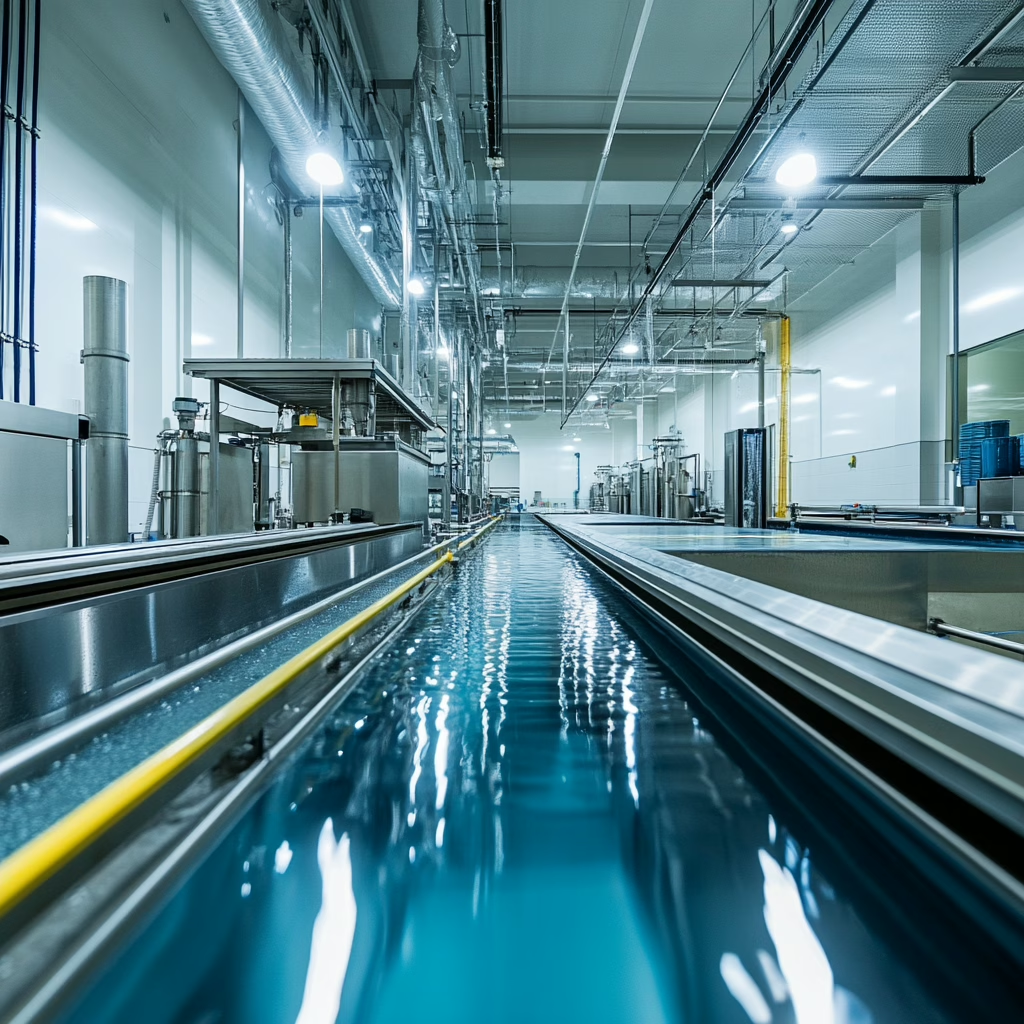
Maintaining food safety is more critical than ever in today’s highly regulated food processing environment. Salmonella, a common and potentially deadly foodborne pathogen, poses a significant risk to consumers, employees, and the reputation of food manufacturers. According to the USDA, Salmonella outbreaks continue to drive hundreds of product recalls annually, particularly in meat, poultry, and ready-to-eat (RTE) foods. Preventing contamination is not only a matter of compliance—it is essential for protecting public health, reducing operational downtime, and minimizing financial losses.
At HS Ultra, we help facilities implement proactive, chemical-free strategies to combat Salmonella. By combining modern cleaning protocols, UV disinfection, and ozone-based sanitation, food processing plants can stay ahead of contamination risks while maintaining regulatory compliance and operational efficiency.
Understanding Salmonella and Its Risks in Food Processing
Salmonella is a genus of bacteria commonly associated with raw meat, poultry, eggs, and even fresh produce. While proper cooking destroys Salmonella in food, contamination can occur at multiple points during processing, packaging, or storage. Cross-contamination between surfaces, equipment, and employees is a primary factor in outbreaks.
The risks are heightened in high-traffic areas where moisture, heat, and organic matter create ideal conditions for bacterial growth. Conveyor belts, cutting boards, drains, and HVAC systems are all potential breeding grounds for Salmonella if not properly sanitized. Traditional cleaning methods relying solely on harsh chemicals often leave behind residues or fail to reach hard-to-access areas, creating hidden contamination zones.
A comprehensive Salmonella prevention strategy must address both visible surfaces and hidden pathogen reservoirs. Facilities that overlook air quality, water systems, and equipment interiors may unknowingly contribute to recurring contamination events, recalls, and potential regulatory violations.
The Cost of Salmonella Contamination
Outbreaks of Salmonella are not just a public health concern—they have significant operational and financial implications. Facilities experiencing contamination face:
- Regulatory penalties: Non-compliance with USDA and FDA sanitation standards can result in fines, temporary shutdowns, and additional oversight.
- Product recalls: Recall events lead to revenue loss, damaged reputation, and logistical challenges in tracing and removing affected products.
- Operational downtime: Addressing contamination requires cleaning, testing, and validating sanitation measures, which can halt production.
- Employee health risks: Staff exposure to pathogens increases absenteeism and can contribute to a cycle of illness within the facility.
Proactive disinfection protocols, combined with data-driven monitoring, reduce these risks and provide a measurable return on investment through fewer recalls, reduced downtime, and improved operational efficiency.
Key Points Where Salmonella Can Enter Food Facilities
Understanding where Salmonella is most likely to appear allows facilities to target interventions more effectively. Common contamination points include:
- Raw material handling areas: Receiving docks, storage bins, and loading areas where raw meat or produce is delivered.
- Processing equipment: Knives, slicers, grinders, and conveyor belts can harbor bacteria if not cleaned between batches.
- Water systems: Recirculated water, chillers, and spray systems may harbor Salmonella if water quality is not maintained.
- Employee touchpoints: Hands, gloves, and clothing can inadvertently transfer bacteria between surfaces.
- Environmental reservoirs: Drains, floors, walls, and HVAC systems can act as hidden sources of recurring contamination.
A successful prevention strategy targets both direct food contact surfaces and environmental reservoirs, combining manual cleaning with chemical-free sanitation technologies for comprehensive protection.
Chemical-Free Strategies to Combat Salmonella
Traditional chemical disinfectants, such as chlorine dioxide, peracetic acid, or quaternary ammonium compounds, remain widely used but have several limitations:
- Pathogens can develop biofilms that resist chemical penetration.
- Residual chemicals can pose safety hazards to employees.
- Harsh chemicals contribute to environmental discharge concerns.
HS Ultra’s chemical-free approach uses aqueous ozone (AO) and UV disinfection to eliminate Salmonella without introducing toxic residues.
Aqueous Ozone (AO): AO is a highly reactive, oxygen-based solution that rapidly oxidizes bacterial cell walls, effectively neutralizing Salmonella on contact. It can be integrated directly into surface rinsing, spray chilling, and clean-in-place (CIP) workflows. After application, AO breaks down into water and oxygen, leaving no chemical residue and reducing worker exposure to harsh sanitizers.
UV Disinfection: Ultraviolet-C (UV-C) light destroys the DNA and RNA of microorganisms, including Salmonella, preventing replication and survival. Strategically installed UV units can treat high-traffic surfaces, conveyor belts, and air within HVAC systems, addressing both direct and airborne contamination sources.
By combining AO and UV technologies, facilities achieve multi-layered disinfection that targets Salmonella wherever it may reside—on surfaces, in water, or suspended in air—without increasing chemical dependency.
Environmental Control: The Hidden Role of HVAC and Air Quality
HVAC systems in food processing facilities are often overlooked in traditional cleaning programs, yet they can contribute significantly to Salmonella contamination. Circulated air can carry bacteria-laden dust or droplets to sensitive areas, spreading pathogens from one production zone to another.
Regular air quality testing and HVAC cleaning, including UV retrofits or chemical-free coil treatments, help reduce airborne Salmonella. Maintaining optimal humidity and filtration also inhibits bacterial growth, supporting a safer, healthier work environment.
Facilities implementing comprehensive air and surface sanitation strategies see measurable improvements in pathogen reduction, fewer product recalls, and a safer environment for employees and visitors alike.
The Importance of Employee Training and Hygiene
Even with advanced chemical-free technologies, human factors remain critical. Employees must be trained to:
- Follow strict handwashing and glove protocols.
- Avoid cross-contamination between raw and finished products.
- Properly operate and monitor ozone and UV equipment.
- Report potential hazards promptly for immediate corrective action.
Integrating technology with employee training creates a holistic Salmonella prevention strategy, ensuring interventions are effective, consistent, and measurable.
Verifying Effectiveness: Testing and Documentation
A robust Salmonella control plan requires ongoing verification. Facilities should implement:
- Environmental swabbing and testing: Identify hotspots and monitor trends over time.
- Water quality testing: Ensure aqueous ozone systems achieve target microbial reduction.
- Air sampling: Confirm UV disinfection is effectively neutralizing airborne pathogens.
- Documentation and reporting: Maintain records for regulatory compliance and continuous improvement.
Data-driven approaches allow food processors to validate that their chemical-free interventions work, giving auditors and customers confidence in the facility’s hygiene practices.
Proactive Steps for Facilities
Facilities looking to stay ahead of Salmonella contamination should consider the following strategies:
- Conduct a comprehensive facility risk assessment to identify potential contamination points.
- Implement chemical-free disinfection technologies, including aqueous ozone and UV systems.
- Incorporate regular HVAC and air quality maintenance into sanitation protocols.
- Train employees on best practices for hygiene, cross-contamination prevention, and equipment use.
- Establish a routine testing and documentation program to monitor microbial reduction and regulatory compliance.
By adopting these measures, facilities can move from reactive sanitation to proactive prevention, reducing outbreaks and safeguarding both consumers and operations.
Why HS Ultra for Salmonella Control
HS Ultra combines decades of experience in chemical-free disinfection with proprietary technology and data-driven strategies. Our solutions allow food processing facilities, meat plants, and RTE facilities to:
- Reduce reliance on chemical sanitizers.
- Achieve measurable microbial reduction.
- Integrate seamlessly into existing workflows without disrupting production.
- Improve safety, air quality, and worker wellbeing.
From raw material handling to finished product areas, HS Ultra’s interventions provide a multi-layered defense against Salmonella and other high-risk pathogens.
Conclusion: Moving Beyond Compliance
Salmonella prevention in food processing is no longer about minimal compliance—it’s about resilience, operational efficiency, and consumer safety. By leveraging chemical-free aqueous ozone and UV disinfection, facilities can:
- Eliminate pathogens on surfaces, in water, and in air.
- Reduce chemical exposure for workers and minimize environmental impact.
- Maintain USDA, FSIS, and FDA compliance with verifiable results.
- Future-proof operations for rising food safety standards and inspections.
Proactive, integrated disinfection strategies ensure that your facility is not only “clean” but hygienically safe, reducing the risk of recalls and protecting public health.
HS Ultra partners with food processors across the Upper Midwest to provide tailored, chemical-free Salmonella prevention programs, ensuring that every facility can operate safely, efficiently, and sustainably.Contact HS Ultra today to learn how your facility can implement a chemical-free Salmonella control strategy and safeguard your operations for the future.


